Pat’s First Car

Pat graduated from El Dorado High School in El Dorado, Kansas in May of 1955. She wanted to get right to work and start earning her way in life. The Wichita Business College was offering a 3 month “crash” course during the summer with a guarantee of employment after successful completion of the course. Pat and her friends Charlotte and Susie elected to take the book-keeping and accounting course and get their working lives started. The school was set up so that if you failed, you had to take the course again. The girls had taken some business classes in high school so were able to breeze right through the course.

The Placement Counselor had noticed that Pat and Charlotte were pretty close and one day called them into her office and asked if they would like to work together. They thought it would be great if it were possible. The counselor said she had already spoken to an employer that was looking for two new people and would hire them both.

Upon completion of school, Pat and Charlotte went to work in the Auditing Department at Sears Roebuck and Company and Susie went to work at Macy’s. The girls were sharing an apartment and getting adjusted to living on their own. Transportation to and from work was possible through the city bus system though it ate up a lot of their spare time. In Pat and Charlotte’s case, the morning bus schedule was easy and caused no problems. However, the evening schedule was a drag in that they had to wait an hour to catch their bus. Going home to El Dorado for the weekend was hard because they had to hope that someone they knew was going that way and would also be able to bring them back.

After being on her job for a while and settled into her apartment and the routine of living on her own and paying bills, Pat decided it was time to buy a car. She enlisted the help of her step-dad, Eddie, who was a fair shade-tree mechanic and for a short time had sold used cars. Pat got home on a weekend and she and Eddie headed for a used car lot on south Main, there in El Dorado. Eddie knew one of the men that worked there and explained to the guy that they were looking for a very reliable car that Pat could drive to work without worrying about it. The salesman said he had the perfect car for her and that it was the most reliable car on the lot. He led them to this car that turned out to be a 1947 Studebaker! What? Was this guy nuts? Maybe we should talk about Studebakers for a minute while you get over the shock. There were five Studebaker brothers (and five sisters). Two of the brothers were blacksmiths and foundry men in South Bend, Indiana who started a company in 1852 making the metal parts for freight wagons. Another brother was in Placerville, California making wheelbarrows for the gold rush miners. He did well and saved up $8,000 and returned home to South Bend and helped the other brothers expand their business to the manufacturing of complete wagons. While building wagons for farmers, miners, and the military, they were also building a reputation for quality and reliability.

In 1902, the company produced a car with an electric motor and in 1904, a car with a gasoline engine. The company continued to build cars and trucks until WWII when they concentrated on the war effort, building great numbers of Army trucks and personnel carriers. Coming out of WWII, the company prepared for the post-war automotive sales surge with radical new designs. When the 1947 Studebaker was introduced, people couldn’t believe their eyes. Due to the radical departure from conventional General Motors and Ford styling, it looked more like a space ship out of a Buck Rogers comic book or like some kid’s idea of what futuristic cars should be like. The flat trunk lid looked so much like the engine hood you couldn’t tell if the thing was coming or going.
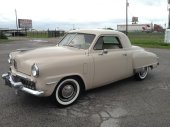
Studie 2

Back on the Used Car lot, Pat and Eddie looked the car over. It started easily, ran smoothly and quietly and was a solid, well-built car. The interior was spotless and was upholstered with quality fabrics. After a test drive, Pat and Eddie were convinced they had found a good car. So, now we have a 17-year-old girl that came in looking for a chic set of wheels, picking a

gray Studebaker. Who would have thought?

Pat was able to purchase the car on easy terms. The total price was $150.00. She put $30.00 down and payed it off at $15.00 per month. This was a little tight as she only made $45.00 a week and had to cover all of her living expenses out of what she was earning. One of the good things, at the time, was that gasoline was only $.17 per gallon.

Over the next few weeks the girls all had their 18th birthdays. Pat wanted to take a trip in her “new” car and, being all grown up now, the girls decided to go to Kansas City and dine at the well- known Italian Gardens Restaurant. The ladies wanted to avoid the embarrassment of showing ID so were decked out in their most mature-looking outfits and had applied make-up to match. The trip to Kansas City was uneventful and they had no trouble finding the Italian Gardens. Once in the restaurant, they were seated, examined the menu, and were ready to order when the waiter returned. They gave their orders and the waiter asked if they would enjoy a glass of wine. They all agreed that would be nice and then, the waiter asked if they would like a carafe. Having no idea what a carafe was but wanting to appear cool, they all said “Each, please”. Well, after eating their lunches and drinking their carafe of wine, they got up to leave. For some reason, they found that standing was a very difficult task. Pat realized that she was in no condition to drive. They talked it over and decided that the smartest thing they could do would be to take in a movie and sober up before heading for home.

There you have it…a first car and a first grown-up trip. Pat was ready to be on her own and took seriously the responsibilities of an adult and car owner. And, now that she knew what a carafe was, never had that problem again. The Studebaker was great and never failed her once.

Dave and Pat Thomas
September 2, 2016

Tim McGraw

Last season NBC started airing a new show called “Who Do You Think You Are?” It’s sponsored by the genealogy-based website, Ancestry.com, and they take a celebrity and trace that person’s ancestors back as far as they can. They visit locations in the U.S. and even go back to Europe or Africa or wherever the quest takes them.

Pat and I were watching an episode last night featuring country singer, Tim McGraw. The story told how Tim thought his last name was “Smith” until he was 11 years old and found his birth certificate and learned that his name was really “McGraw” and that led him to the fact that he was the son of Tug McGraw the baseball player.

As they dug into his story, Tim learned that he was part of a pioneer family in Missouri named Chrisman. The Chrismans were tracked back to the Shenandoah Valley of Virginia during the 1700’s. The story told how the Palatines fled religious persecution in Germany and traveled to England and then were recruited to travel to America. Upon arrival in America the people became indentured servants as the British forced them to work off the cost of their passage. The next revelation was that an earlier ancestor was named “Yost Heyd”. Yost Heyd was apparently an enterprising man and went from being an indentured servant in 1710 to being the largest private land owner in Virginia and was known as “The Baron of Shenandoah”. A young surveyor who was surveying the state recorded Yost Heyd’s name in his journal and probably knew him well. That young surveyor was George Washington.

While Pat and I watched the program, I began to perk up as I heard words like Palatine, Shenandoah, and then “Yost Heyd”. I remembered those names from several years ago when I was posting information and names to my Family Tree Maker database. After watching the program, I went to the computer, opened Family Tree Maker, and did a search on “Yost Heyd”. Sure enough, he popped up and the program said he is my 7th great grandfather! So, Guys…Tim McGraw is your cousin! I know that all of you guys would like to say hello to Tim and would certainly enjoy meeting up with his wife, Faith Hill.

Dave Thomas 11/12/2012

Tim -Faith


Tim McGraw and wife, Faith Hill. 


Palapa In Yelapa

Palapa


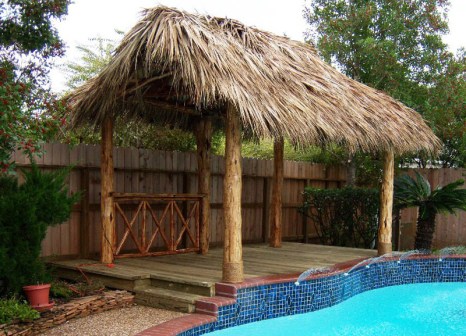
When I was talking with Doug the other day he mentioned that Penny had purchased some indoor-outdoor carpet for the larger palapa in their back yard. (For any of you not familiar with them, a palapa is an open-sided beach hut with a thatched roof.) This got me to thinking that Pat and I once saw a palapa in Yelapa. I’ll try to clear this up for you. Yelapa is a settlement in Mexico that is located on a beach that is a couple hours boat ride south of Puerto Vallarta. You take an excursion boat that has nice bench seats and a canopy to protect you from the sun. It’s a beautiful boat ride on a blue ocean with varying shades of green in the jungle on shore. Your boat pulls up to a dock and as you get off you can see dozens of palapas scattered along the beach. Many of the palapas contained people selling trinkets and tourist stuff. However, the specialty of the place was pie! They offered coconut, chocolate and lemon meringue that was “to die for”. Another special activity was para-sailing. As you were lifted above the height of the tallest trees in the jungle you could see a beautiful waterfall. So, along with all the sights, thrills, and pies you also got to enjoy the sight of a palapa in Yelapa.

Dave Thomas
June 20, 2011


Our Beach House

It was early 1999 and Pat and I had been living in Avocado Estates for eleven years. Avocado Estates was a gated community of 110 homes in the hills on the south side of El Cajon. The common areas included three avocado groves, a pond, tennis courts, an Olympic-size pool, and a hiking trail. The streets all curved around the hills and gave the development a charming rural look. It was a beautiful place to live and we had thoroughly enjoyed being there. We were getting restless though and were ready to try something different. Pat had taken early retirement and I was just two years away from retiring at 65.

We owned a 3 bedroom condo in University City that we had been renting out for 10 years. We decided that when the current tenant moved out, we would sell our home in Avocado Estates and move into the condo until we decided what we were going to do. By mid year we had received notice from our tenant and we were able to close a deal on the Avocado house. We had the interior of the condo painted, installed new carpet in the bedrooms, replaced the downstairs carpet with wood flooring, and then, Pat remodeled the kitchen. It was a tiny, galley-type kitchen but she designed the cabinets to maximize storage space and bought all new appliances. The kitchen and the rest of the home looked great and you kids were generous with your time in helping us move in. Remember, we had to put a lot of our stuff in storage since we were downsizing considerably.

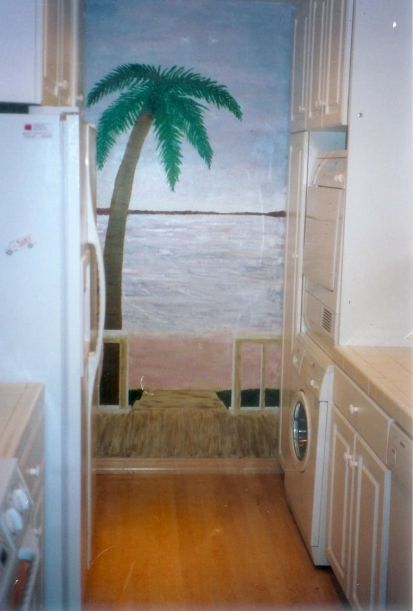
We enjoyed living in the condo with its proximity to downtown, Old Town San Diego, and the coast. As the crow flies, we were only about 5 miles from the beach and the Pacific. Still, we weren’t quite satisfied with our circumstances and were thinking about a beach house with a view of the water. Since we had just renovated the condo and moved in, it wasn’t practical to just pack up and go somewhere else. After a lot of back and forth conversations, Pat suggested that a large picture or a mural might give us what we were looking for. We decided that a mural would be just the thing and the kitchen was the only place downstairs that would be suitable. The next consideration was that hiring an artist would cost us some big bucks. Pat suggested that we do the job ourselves. Neither of us had ever shown any artistic ability but what the heck…? A coat of paint would cover anything that was too ugly for humans to view.

We bought some paint and got started. Pat and I enjoyed working on it and Jeff got involved for a while. Terri stopped to see us one day and we convinced her to add a few strokes. When we got done it kind of looked as if you were stepping out the kitchen door onto a porch and then a sandy beach. Maybe you could call it “hokey” or even “tacky” but it was fun to do and we enjoyed it all the time we were there.

We only stayed in the condo for 2 years. Pat and I continued searching the Multiple Listings online for the Fort Worth, Texas area. We had some friends down there we had been talking to and ended up buying a new 4 bedroom, brick home in Keller. So much for downsizing but I guess we satisfied our itch for something different.

Beach House

Dave Thomas
February 12, 2015


Such A Deal!

I think I started going hunting when I was about eleven so that would make it about 1947. I went out with two neighbor boys that lived three doors to the south of us. Gary Casner was a good friend and was my age. His brother, Billy Bob, was about four years older than Gary and I. Bill had an old Stevens .22 Single-Shot rifle and he would let Gary and I take a shot now and then. We felt pretty good when we managed to hit a tin can or two.

I dreamed of owning a .22 and my Dad promised I would get one on my 12th birthday. Well, my 12th birthday came and went and no rifle showed up. I didn’t really expect it to happen because I knew there was no money in the household for an extravagance like that. I knew I would have to make it happen myself.

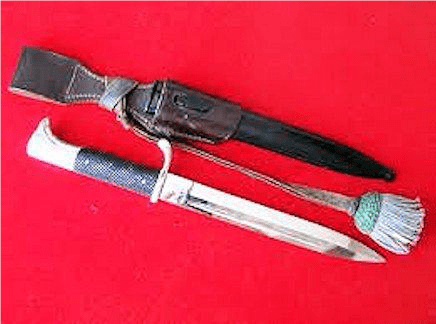
Across the street and two doors north lived the Breeden family. “Red” Breeden was a WWII Army vet who had managed to bring home some souvenirs from Europe. He had a metal helmet, a helmet liner, canteen and web belt, German money, and some German equipment. To me, the prize was a German Officer’s dress knife. It was a beautiful thing and you could see it was made of the finest German steel. Sure enough, stamped on the blade, right under the hilt, was the name “Solingen”. The hilt was a cast piece with some decoration. The knife had a beautiful stag handle and the butt piece was cast in the shape of an eagle’s head. The sheath was also of beautiful and shiny chrome-like steel with cast decorations attached.

Red kept his souvenirs out in his garage and if he happened to be working out there when we came by we would stop and talk and he would show us those articles he had brought back from the war. While looking at his stuff I also noticed that Red had a pair of men’s figure skates. I was really impressed with them because all we kids had at the time were clamp-on ice skates that rarely stayed on more than a few minutes at a time. A pair of shoe skates would have made any kid happy.

Talking with Red I discovered that he was interested in getting his young son an electric train set. I happened to have a nice train set that I had outgrown and never played with. Red mentioned that we might make a trade so I began thinking about the stuff in his garage that I might be interested in.

Meantime, Bill Casner had just acquired a new Mossberg .22 caliber Bolt-Action Repeater. While showing me the new rifle, Bill indicated that he would be getting rid of the old Stevens single-shot. I had already told Bill about my possible trade of the electric train and had told of the items I might trade for. We talked about the shoe skates and I told him they were not my size and he indicated they would be perfect for him. I took this information into account and went home to think about it.

The following Saturday I went over to Red’s house to make a deal. I proposed trading my electric train to Red for the ice skates and the German officer’s knife. Red told me he had taken that sheath or scabbard from the knife and used a hacksaw to cut a couple inches from it so it would fit another knife he had. I couldn’t believe it! That would be like painting a mustache on the Mona Lisa! I couldn’t believe that Red placed so little value on the knife and sheath and was broken-hearted. I still wanted the knife though and went back at him with a new offer…my electric train for his ice skates, the German knife, and an American Army bayonet. Red agreed and we exchanged items.

My target was still the rifle so I went to Bill next. After a couple of days of thinking about it, Bill was eager to swap his old single-shot for the ice skates and an old stripped down Schwinn bicycle with no fenders. (I had a nice Schwinn bike but figured this old one would keep the wear and tear off my good one). I couldn’t have been happier. I hunted with the old single-shot for a few years until I was also able to buy a Mossberg bolt-action. I ran my hands over the German Officer’s dress knife and admired it for its superior craftsmanship and beauty. All of the wheeling and dealing I’ve described took place in 1948. In 2007, I decided to sell my collection of knives and started listing them on E-Bay. The German Officer’s Knife sold for $237.00. Such a deal!

German Knife 

I don’t have my original pictures but found this similar knife on the Internet. My knife had a more attractive stag handle with a silver casting in the center of it.

Dave Thomas

May 14, 2014


The Big Trip of 1944, Part 3

One big thing that we all enjoyed was a parade that was part of a War Bond Rally and featured General George Patton and General Jimmy Doolittle. I believe the parade was on Wilshire Boulevard. I remember that Grandpa drove us over there and we sat on the curb and waited to see the war heroes. There were several cars in the parade and the two Generals were riding in the back seat of a convertible.

Grandpa had been telling us about Walter Knott and his berry farm and the delicious boysenberries he grew there. We went there one day and I remember it as being out in the middle of a large grove. We drove down a lane, through the trees until we got to a clearing where there were a few old buildings.

Knott's Jail 1940's

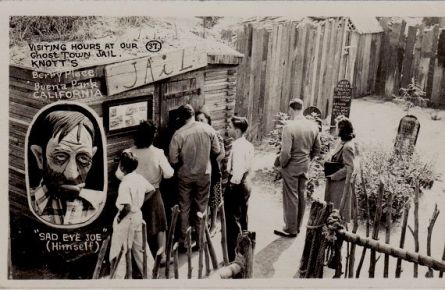
Knott’s Berry Farm Jail, 1940’s

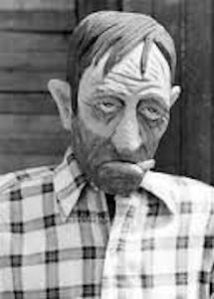
We got out of the car and walked over to a building that looked like a jail. Inside, there was a dummy that looked like a real bad guy. It scared the devil out of us when he started talking! We talked to him for a while about his plight and his sorry history and then were completely amazed when he started talking about our trip and other personal things that we hadn’t mentioned. We kept up a conversation but kept wondering how this dummy knew so much about us. We soon heard Grandpa yelling for us from around the corner of the next building. We hadn’t noticed that he wasn’t still with us. We went around the corner of the building and found Grandpa and Walter Knott laughing like crazy. Mr. Knott held up a microphone and told how he and Grandpa had conspired and tricked us. We continued to have a great time and bought several jars of boysenberry jam before we left. Even today, we’ll be in a grocery store and I’ll see jars of jam with the distinctive Knott’s Berry Farm script and I’ll flash back on some of these memories.

Knott's 2

           It’s been 70 years but I still recognize this guy that talked to us from the jail.

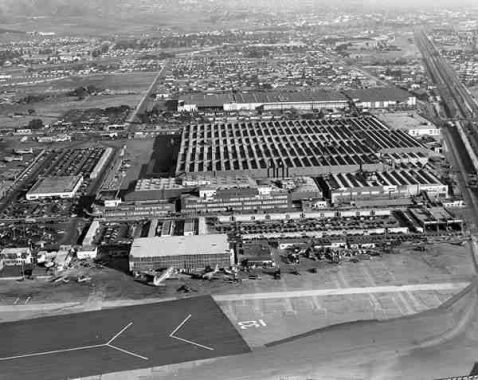
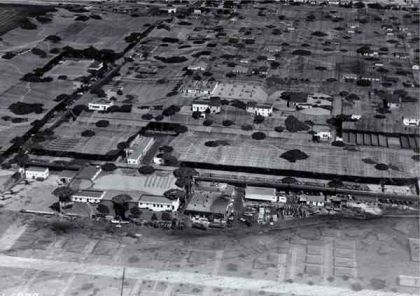
I didn’t know where we were but one day we drove past an aircraft factory. I would guess now, that we must have been in the Santa Monica area. There were planes parked everywhere and the whole area was covered with camouflage netting. The top of the netting looked like grass, vegetation, and homes. Remember, at this time of the war, we didn’t know but what the Japanese would be attacking the west coast at any time. The way the netting covered the whole area, it made it look like homes and farms. I don’t remember now what types of planes we saw, but I recognized them at the time. Like most American kids, I had studied my “spotter” cards and recognized almost every plane I saw. For you young people who haven’t seen them, the “spotter” cards came in a deck and were the same size as regular playing cards. Each card was devoted to a different airplane and told what it was and what its identifying features were. Also, there were 3 or 4 different views of each plane so you could identify it when seen from any angle. Anyhow, the sight of all those planes and that camouflage brought the war a little closer to home.

Lockheed Plant-before

Lockheed Plant Before Camouflage

Lockheed Plant-after

Lockheed Plant After Camouflage

Mom and Dad wanted to visit Ruby Mae in San Diego. She actually lived in El Cajon, just east of San Diego. Grandpa loaned us his car and we headed south on Highway 101. Dad had promised that we could go swimming in the ocean and as soon as we began seeing it, we began begging to swim. We finally got to La Jolla and Dad stopped in a good area of the beach and we all put on our swim suits. It was a gloomy, overcast morning, and pretty cool. This was what we now know as “June Gloom” and we were miserable. My sister and I had run down to the surf and waded in but turned right around and got out. That water was freezing cold and we weren’t about to go in again. Dad said that we had been whining for 100 miles and we had better get in the water and enjoy it. He finally gave up on us and dived into the surf and pretended that he was having the time of his life. Mom had already changed back into her dress as she wasn’t getting into that water either. We got through that experience and made it to Ruby’s place in El Cajon.

Ruby lived in the first or second block of west El Cajon Boulevard, just as you come in to town. She owned or managed a pottery shop there. Her house or building where she lived was set back from the street and the whole front yard was full of pottery. I remember the impression of an organized place of business and I imagine that it was because Ruby Mae was a high energy type of person.

Ruby took us to Tijuana and I remember it as being very colorful. My sister and I had our pictures taken while seated on those donkeys that have the “zebra” stripes painted on them.

Mom and Dad were surprised to receive unusual gifts from Ruby. They were a pair of flesh-colored highball glasses shaped like women’s torsos. She said the originals were made for ventriloquist Edgar Bergen by the pottery factory that supplied her with product.

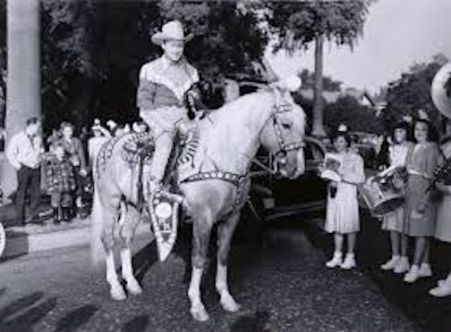
The biggest thrill for me came when we attended the Roy Rogers Rodeo at the Los Angeles Memorial Coliseum. For quite some time I had been going to the cowboy movies on Saturday afternoons and to get to see Roy Rogers and Trigger in person was a fantastic experience.

Roy and Trigger

Dave Thomas
February 4, 1994; Revised and added pictures March 5, 2015.


The Big Trip of 1944, Part 2

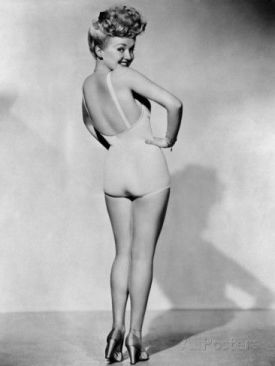
 We spent one day at the Santa Anita race track. Not long after we sat down, Betty Grable and her entourage came in and sat down in the row behind us and about 8 or 10 feet to the left. She had her baby with her and a woman who must have been a nanny and a man who was probably the driver. We were all quite excited to see her. Remember, this was the height of WWII and Betty Grable was the most famous pin-up in the world. Even an 8 year old boy knew about her and her legs that had been insured for a million dollars.

betty-grable-world-war-ii-pin-up-picture-1943

Betty Grable

WWII Pin-up Picture, 1943

The main thing I remember is that she was nursing her baby and I was told not to watch. We saw some other movie stars but the only one I can remember is Pat O’Brien. Grandpa taught us how to bet on the races and we had a good time betting pennies among ourselves. We used the posted odds and paid off on Win, Place, and Show. The main thing I learned was that having a half hour to wait between races made horse racing a boring proposition and I’ve never wanted to go again.

On one of our excursions we went past the Hollywood Canteen. In War-time 1944 it was at the height of its popularity. The movie stars would show up every day to dance with whatever servicemen were there and did what they could to entertain them. As we drove past, we had high hopes of seeing some movie stars but we had no luck on that.

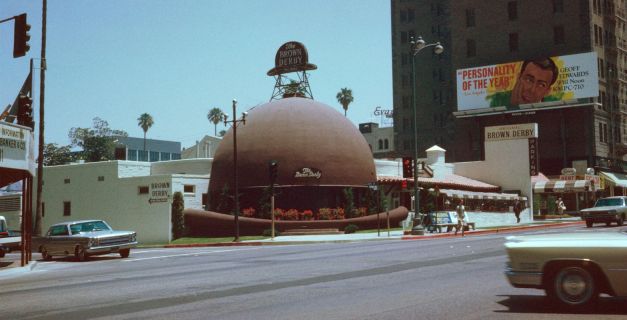
We went past the Brown Derby Restaurant which was a big part of Hollywood celebrity life. I was amazed to see that it really was shaped like a derby.

Brown_Derby_Restaurant

The Brown Derby Restaurant

We visited a lot of well known landmarks that were interesting but didn’t leave me with any stories. Among them were the Griffith Park Observatory, the Rose Bowl, the corner of Hollywood and Vine, and Olvera Street. 

One day we stopped and walked around in front of Grauman’s Chinese Theater. That was another landmark that even we Kansans knew about.

One morning we had breakfast in Hollywood at the restaurant from which they broadcasted “Don McNeil’s Breakfast Club”. It was a radio show that was heard nationally and was one of the most popular morning shows on the air. We got to watch them do the show and enjoyed it a lot. The building itself was quite interesting. The front was built of rough stone and looked like a grotto. There was a realistic looking waterfall that fell from the roof and was caught behind a façade just above the door. It gave the impression you were entering a cave behind a waterfall.

One day we went to the La Brea Tar Pits. In some areas the tar was still hot and bubbling and in others it had cooled off and solidified. Apparently the animals had come in search of water and had stepped into the tar and become trapped. The workmen at the tar pits were cutting out large blocks of the solidified tar and you could see that there were hundreds of bones in each block. We were told that the blocks of tar would be taken to the coliseum museum where the bones would be removed and assembled in their natural skeleton forms. They would find large animals like dinosaurs and mastodons, wooly mammoths and saber-toothed tigers as well as every other animal that lived in the area. Later we went to the Coliseum Museum that is actually located under the Los Angeles Memorial Coliseum and saw the hundreds of skeletons on display there. I remember the skeleton of a saber-toothed tiger on display near the entrance and a 50 foot long dinosaur hanging from the ceiling.

We went to the Huntington Library and Art Museum. Kids under 12 weren’t allowed inside but Mom convinced the attendant at the door that we should at least be allowed to see the Library’s most famous paintings, “Blue Boy” and “Pinkie”. Mom took us in just long enough to view Blue Boy who was hanging near the entrance and Pinkie who was just down the hall to the right. We felt privileged to get to see them as that was all the grown-ups talked about on the way. Mom bought us some postcards with reproductions of the paintings. Since we weren’t allowed to stay inside, the grownups took turns staying with us in the gardens. I remember the gardens as being beautiful and having a lot of cactus, many of which were in bloom.

Dave Thomas
February 4, 1994; Revised and added pictures March 5, 2015.


The Big Trip of 1944, Part 1

This is about a vacation trip my family took just prior to my eighth birthday in 1944. We saw so many extraordinary things that made such an impression on me.

My Mom’s Dad, my Grandpa George F. Sicks, lived in Los Angeles. Mom’s 1st cousin, Ruby Mae (Peebler) Bernard lived in San Diego. Grandpa’s trip to come back to Kansas and get us and take us to L.A. had been scheduled for quite a while. The fact that Ruby was traveling at the same time may have been just a coincidence. She drove back with her baby son, Barney Jr. who was probably 6 months old. Ruby had come back to show off her baby and get her sister, Carol Jean, who lived in Wichita. Carol had three daughters, Vicki Sue, Carolyn Jo, and Carmen Jane. Vicki was the oldest but I doubt that she was more than 4 or 5. Carol, Vicki, and Carmen were going to San Diego for a visit with Ruby and then going on to Klamath Falls, Oregon to visit with our great-uncle, Virgil Peebler and his wife, Peggy. Carolyn Jo was going to stay with Peggy’s sister, Edith, and her husband, Ted. They would take Carolyn Jo to Klamath Falls to join the rest of the family.

Ruby was tall, good-looking, had red hair, and was brash. She was fun but you never knew what was going to come out of her mouth. Her husband, Barney, was in the Navy and was overseas in some war Zone. Carol was tall, good-looking, and had long blonde hair. I hadn’t thought about it before but Terri looks a lot like Carol Jean.

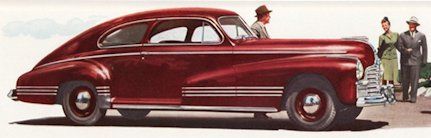
Grandpa and Ruby were both driving 1942 Pontiac, 4-doors, with the “torpedo” rear ends. Grandpa’s was black and Ruby’s was sky blue.

1942-Pontiac-4dr

Mom, Dad, Sylvia, and I traveled with the rest of the group, in the two cars. We swapped cars now and then to keep from getting bored. Cars didn’t have air conditioners back then so it was impossible to keep cool. Most filling stations still had outhouses rather than tiled restrooms and quite often they were 4 or 5 holers in order to take care of crowds. Quite often, you had neighbors on either side as you tried to cope with the stench and the flies in the 100 degree heat.

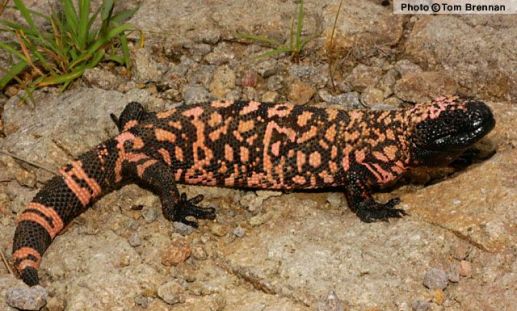
What must have been our second night was spent in a motel in San Simon, Arizona. This was one of Grandpa’s favorite areas and he knew the people who owned the motel. (When I spent the summer with him in 1950, Grandpa owned 160 acres about 1 ½ miles west of town). When we were loading up to leave the next morning, Grandpa put a couple of boxes with chicken wire covering the ends, in the trunk. He opened one of them and reached in and lifted out a Gila monster and scared the devil out of me. He had already told us a number of stories about Gila monsters and how they bite down on you and won’t release their grip unless you cut their heads off. Grandpa said he had caught these two and was taking them to California. He said he was giving one to the Griffith Park Zoo in Los Angeles and the other to the San Diego Zoo. He said he had provided critters of different types to both zoos in the past.
Gila Monster

Another thing I remember about San Simon is that when you leave town, driving west, you can look to the south, to the Chiricahua Mountains and see what is known as “Cochise’s Head.” When you are in the right area, and several mountain peaks are lined up correctly, you can see the profile of a man’s head as if he were lying on his back and looking up. Cochise is still there looking after his stronghold.

The next thing I remember (besides the stinking outhouses in the desert) is arrival in Yuma in the early afternoon. We were ready to eat some lunch and were looking for a place to stop. Remember, this was during the war and everything was rationed. We were looking for a café when we came to one which had the word “Butter” painted across the window in big, bright letters. Since we were all sick of eating the margarine which had become available during the war. We thought we were in for a treat. We got in, got settled, and ordered a meal. Everything was fine until we were served and Grandpa realized that the stuff in the butter dish wasn’t butter but was the hated margarine! First, he called the waitress over and explained the error to her. Well, she was sorry but margarine was all they had today. Her explanation wasn’t adequate and as Grandpa started getting up a full head of steam he demanded to speak to the owner of the place. When the owner came in from the kitchen where he presided over the grill, Grandpa tried to explain the error to him. He got the same response…”no butter today.” Grandpa was soon shouting at the top of his lungs about people that painted “Butter” on their windows to lure people into their place and then had the gall to serve them margarine. Grandpa felt that he had been tricked and cheated and he wasn’t going to stand for it. I remember a lot of noise and embarrassment but don’t remember how this was resolved. I don’t know if we went somewhere else or if the owner of the place somehow placated Grandpa.

We split up in Yuma with Ruby and Carol and the kids heading for San Diego and us heading for Los Angeles. Grandpa owned a home at 6151 Dennison Street in East Los Angeles. It was a nice neighborhood with Spanish-style houses and well kept yards full of flowers. I remember being amazed at the sight of streets lined with palm trees.

My Dad only had 2 weeks’ vacation but Mom and we kids were going to stay for 6 weeks. Grandpa set up a sight-seeing schedule that would allow Dad to see as much as could be crowded into his time period.

Dave Thomas

February 4, 1994; Revised and added pictures March 5, 2015.


It Backfired On Him!

Pat was one of the first female “big ticket” sales people hired by Sears here in San Diego. “Big ticket” meaning big bucks…appliances, TV’s, hi-fi’s, refrigerators, etc. The men felt that they were being invaded and had to protect their turf. They made the women’s lives miserable whenever they possibly could. They stashed inventory, hid customer orders, told returning customers that their sales lady was off that day so they could steal the sale even though the woman might be off the floor on lunch break. In short, they did every petty thing they could think of.

If there were no customers on the floor, the sales guys sometimes eased their boredom by picking at one another. Ed was one of the worst when it came to this and he began making a “cause” out of Pat’s handwriting. Pat scribbles her signature and everything else because she simply doesn’t want to take the necessary time to make things neat. A good part of the time, she can’t even read her own notes. When signing a legal document she slows down enough to make her signature legible.

Ed, on the other hand, wrote beautifully and his penmanship was like a work of art. He couldn’t understand why Pat’s handwriting was so bad and why she didn’t care. He thought there must be some dark reason for this and he was bound and determined to find out what it was. He continued ranting about it every time he got a chance.

It happened that the San Diego Fair was in full swing and on a day off, Pat and a friend decided to go. They went to the art show, the photography show, and the garden show and then started checking out the merchandise booths. Mixed in with the can openers and super detergents, they came upon a booth advertising “Handwriting Analysis”. Pat was intrigued by this since she had been getting so much grief from Ed and she stepped up to get it done. She was delighted by what the analyst had to say. She was told that her handwriting indicated she was open-minded and creative and free and that she had a great zest for life. She could hardly contain herself until she went to work the next day and told Ed and the other guys what she had learned. Ed, of course, was taken aback, in that the findings in no way agreed with all of the negative stuff he had been putting out. He was scheduled to be off the next day and vowed to go to the fair and get an analysis of his beautiful penmanship and show Pat and the rest of the crew what the evaluation of a true craftsman’s work would be.

Two days later, a subdued Ed showed up for work. In a low and even voice, he said that his penmanship had been described as artificial, deceptive, and was definitely covering up a deep, dark, secret. Ed was feeling pretty low but you’ve got to hand it to him…he had the guts to lay it out before everyone.

Strange as it may seem, Ed was one of Pat’s favorite co-workers. As ornery as he was, if caught at something he would always ‘fess up and laugh at himself for getting caught. Pat says that as long as you were on guard, he was fun to be around and was basically a decent guy.

Dave Thomas
June 20, 2015


How My Back Was Fixed On A Front-end Machine

My last two years in high school I was in an occupational program that allowed me to leave school at 2:00 PM each day and go to work at the local Chevrolet/Buick garage. I worked until 6:00 PM on weekdays and on Saturdays from 8:00 AM until 1:00 PM. I washed cars, swept up, and did whatever needed to be done.

Somehow, I had hurt my back. I don’t remember how it happened but it was probably something stupid. I was in misery at work and told the Parts Man about it. He told me I should talk to Frank Prosser, one of the mechanics. He said that Frank had formerly been a chiropractor and might be able to help me. I don’t know how Frank had gone from chiropractor to mechanic. As a mechanic he would have good and steady pay and regular hours but who knows? Frank was the oldest man in the shop and was really a nice guy. I went over and told him about my back problem and asked if he could help. He told me he would be glad to help me and would do so at quitting time and that I should meet him at the front –end machine. That sounded kind of strange but I agreed to meet him.

At quitting time I went to the front –end machine and Frank was already there. He had brought a couple of those fender covers that mechanics use so they won’t scratch the paint on your car. Our front-end rack was elevated some 15 to 18 inches so the mechanic could get under the car and you had to drive up a couple of ramps to get your car up there. Frank spread the fender covers on the rack and told me to lie down on my stomach. He said that this was the only place in the shop where I could lay down but he could still reach me without breaking his own back while leaning over. He checked out my spine and then massaged a couple of areas and applied pressure to them. After a few minutes he had me sit up and he gave me a lecture on how to lift and how to take care of my back. I felt better immediately and the one treatment was all I needed. After a couple of days the soreness was gone. My mechanic friend and his front-end machine had straightened me out.

Dave Thomas
November 5, 2013