Breaking It In

I seem to have reached the age where everything reminds you of something. We were watching TV last night and a car commercial came on that showed a family accepting delivery of a new car. That’s a big event in the life of any family and certainly evokes happiness in all those involved. Unfortunately, I once witnessed the delivery of a new car that started out as a happy occasion but then turned to worms before once again becoming a happy time.

It was the fall of 1952 and I was a Junior in high school. I was lucky in that I was taking part in an occupational training program that allowed me to get out of school every day at 2:00 PM and go to work. I was working at Howard Motors, our local Chevrolet/Buick dealer. I was doing a little bit of everything…washing and waxing cars, lubricating them, undercoating, sweeping the shop, cleaning the restrooms, and waxing and buffing the showroom floor.

One day, a man named Harold came in and talked to one of the new-car salesmen. I knew Harold and knew that he was a successful farmer who lived a few miles south of town. You could drive past his place and everything always looked fresh and new. The house and barn always seemed to be newly painted, the yard was mowed, and the fences were tight and in good repair. What’s more, he was a very nice man.

Harold spent an hour or so with the new-car salesman, talking and then taking a test drive in a demonstrator. Then, they got the Used Car Manager to appraise his trade-in. I don’t remember what kind of car it was but do recall that it was several years old but looked well cared for. They made a deal that afternoon and Harold got in his trade-in and drove off.

A few days later Harold and his family came in to take delivery of their new car. They had purchased a new 1952 4-door Chevrolet sedan with automatic transmission. Chevrolet didn’t offer a V8 until 1955 so this was an in-line 6 cylinder engine. As I recall, the car was white with a gray top.

I finished cleaning the windows of the new car and was transferring tools and other items from one trunk to the other. Again, I was impressed with what a nice family they were. The parents were well dressed and the two kids looked like they had on their Sunday best and they were well mannered.

Bud, the salesman was busy giving last minute instructions on the importance of breaking in the engine correctly. At that particular time in automotive history, alloys and the machining process weren’t as good as they are today. After driving 100 miles, the oil pan and motor oil might contain some minute metal shavings that had been dislodged as the engine wore in. To combat this problem, the engines came from the factory filled with a “break-in” oil. It was said to be imperative that you change this oil after 100 miles of driving so that no errant metal shavings could damage the engine. New owners were also exhorted to drive carefully and at reduced speeds in order to give the piston rings an opportunity to seat properly and function as they should. These instructions for breaking in the engine were given in detail in the Owner’s Manual and were an important part of the salesman’s delivery spiel. Bud finished his instructions, ending with a final warning to take it slow and easy. Harold and the family waved and drove off. Another happy customer hitting the road.

Normal work continued and after a while I saw the Service Manager, Kenneth Markley, get in the wrecker and drive off. Kenny was back in less than an hour and pulled into the shop with Harold’s new ’52 Chevy hanging on the hook behind him. The car didn’t appear to be damaged as if in a wreck so we were curious to find out what had happened. We crowded around Kenny as he started telling the bad news. Harold and his family barely got back to the farm before the Power Glide transmission gave up completely. Driving carefully and not wanting to overtax that new engine, Harold had put the car in “Low” and driven 20 mph all the way home. By the time they got there, smoke was coming from under the car and it smelled as if the whole thing was burning up. Harold called the shop, told Bud what had happened, and probably felt like an idiot.

After hearing the story, the guys in the shop thought it was a dumb thing to have done. However, as they talked, they realized that none of them had felt real sure of themselves the first time they drove an automatic. The sales manager finally decided they may have been a bi overzealous in their warnings about driving too fast and harming the engine. He determined that the shop should pay for a new transmission.

The replacement transmission was ordered from Chevrolet and arrived in a couple of days. The Shop Foreman, Kenny Dickinson, jumped on the project and in a couple of hours had the car back in “new car” condition. Bud, the salesman, and the Sales Manager delivered the car to Harold’s home. They spent some time talking with Harold about the Power Glide transmission and the other new features of the car. Harold and his family appreciated the efforts of the Sales Department and the company and returned to feeling good about their new car.
The Coronado Ferry and the Bridge: Part 3

Part 3 is made up of notes, newspaper clippings from the San Diego Union and Evening Tribune and miscellaneous pictures I’ve collected over the years. Some of the clippings date back to 1961.


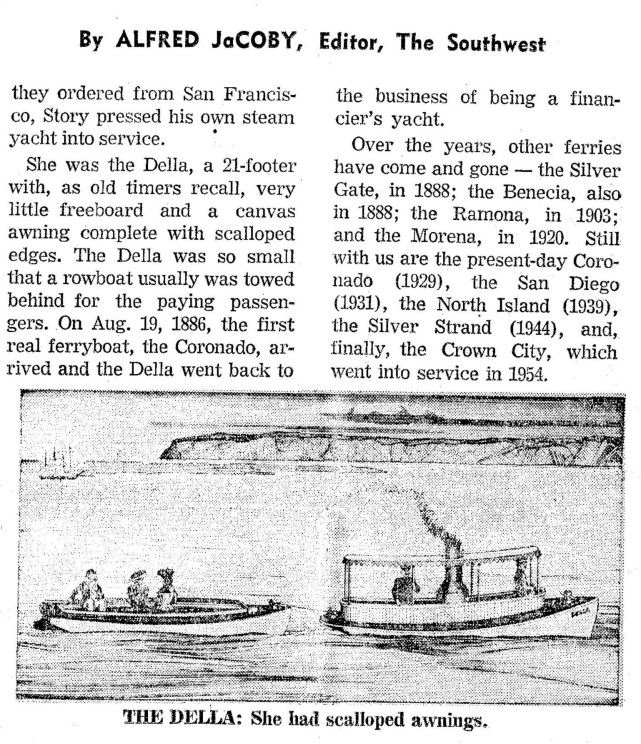
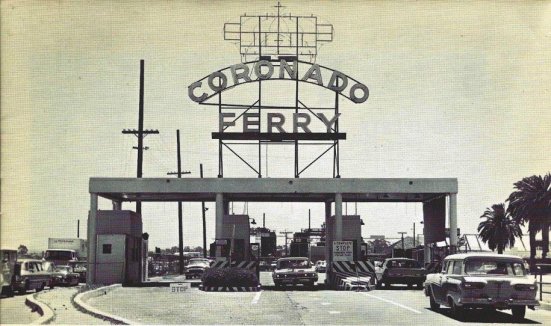
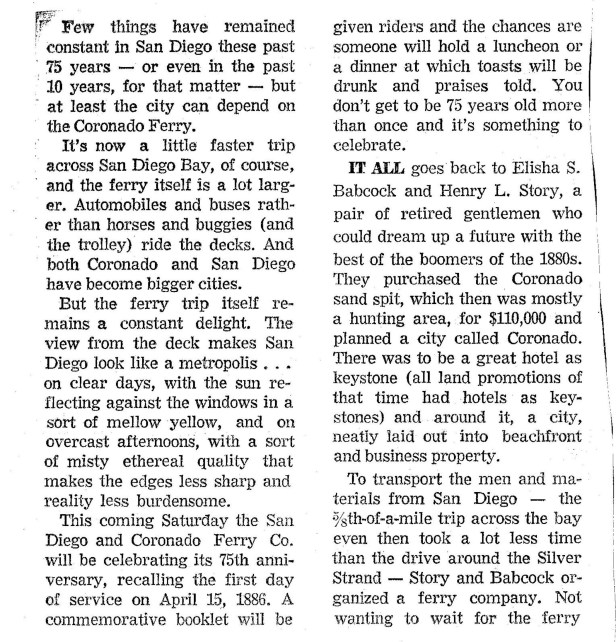
Land speculation and development was going wild in Coronado in the 1880’s. There was talk of grand hotels and resorts being built and the place was sounding like a potential gold mine. Two forward-looking men realized that getting workers and materials and later hotel guests across San Diego Bay quickly would be a great boon for the building and tourist industries. Riding in a buggy the length of the bay, around the south end, and then up the Silver Strand to Coronado seemed to take forever. It was only 5/8 of a mile across the bay and the solution found, was the formation of a ferry company. I have attached a clipping (San Diego Union, August 9, 1961) that tells the story of the first 75 years and gives details about those first days.

b-f_20

b-f_6

b-f_20cb-f_9

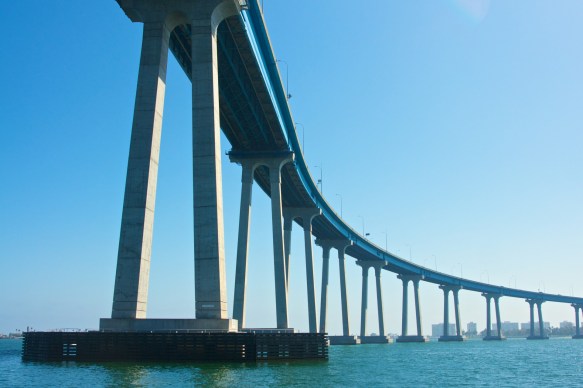
The first day of service for the Coronado Ferry Co. was April 15, 1886 and the last crossing was made August 3, 1969. That’s over 83 years of service and pleasure provided day in and day out. Unfortunately, this picturesque mode of travel reached the end of its era. The last day of service occurred on the opening day of the beautiful San Diego-Coronado Bridge. Crossing the bridge is a beautiful and unique experience in its own right. The bridge is 200 feet high because at the time it was built, the Navy insisted that the center span be tall enough to clear their tallest ships, diesel-propelled aircraft carriers. That condition was met, though the bridge isn’t high enough to clear the nuclear carriers. The height requirement had a lot to do with the long and curving lines of the final configuration. Also, there is a story that says the bridge had to be over a mile long to get federal funding so the curvature was added to give additional length.

The first day of service for the Coronado Ferry Co. was April 15, 1886 and the last crossing was made August 3, 1969. That’s over 83 years of service and pleasure provided day in and day out. Unfortunately, this picturesque mode of travel reached the end of its era. The last day of service occurred on the opening day of the beautiful San Diego-Coronado Bridge. Crossing the bridge is a beautiful and unique experience in its own right. The bridge is 200 feet high because at the time it was built, the Navy insisted that the center span be tall enough to clear their tallest ships, diesel-propelled aircraft carriers. That condition was met, though the bridge isn’t high enough to clear the nuclear carriers. The height requirement had a lot to do with the long and curving lines of the final configuration. Also, there is a story that says the bridge had to be over a mile long to get federal funding so the curvature was added to give additional length.

***********************************************************************************************

A lot of people are terrified when going over the bridge because, at the center, it is 200 feet tall. You can look out over the waterfront and the city and it’s a lot like being on the side of a mountain and looking into a vast canyon. A few years ago, Pat’s aunt and uncle had come from Wichita to visit us. On Saturday, Pat had to work so I decided to show them the beautiful bridge, San Diego Bay, the city of Coronado, and the Hotel Del Coronado. As we came off the approach and started up the bridge, these flat-landers from Kansas immediately started yelling. By the time we reached the center span, the highest point, they were really freaking out. The best I could come up with was that we were half way and would soon be on the ground. We lived through that experience did our sight-seeing. They had calmed down enough that they let me drive them back across the bridge rather than driving all the way down the Silver Strand and around. They actually enjoyed the view on the way back.
  san-diego-coronado-bridge

san-diego-coronado


The Coronado Ferry and the Bridge: Part 2

One day, Pat had been doing her regular chores and chasing the boys, who weren’t quite 3 years old, and trying to keep them in line and she was exhausted. She read the boys a story and put them down for a nap. Satisfied that the boys would be “out” for a while, she fastened the security chain to the front door, laid down, and promptly fell asleep.

Sometime later she was awakened by someone ringing the door bell. As she walked to the door, she realized that a chair had been pulled up to the door and that the security chain was undone. Pat experienced a feeling of panic as she got to the door, not knowing if she would open it to the Police or someone else with bad news. She threw open the door and saw a lady she recognized holding the hands of our two boys. She remembered that the lady lived 2 blocks away, across a busy street, and that the bus stop was in front of her home. The woman had seen Pat and our two boys at the bus stop before and was quite concerned to see the boys there by themselves. She asked them where there mother was and where they were going. They told her that their Mom was asleep and they were going to ride on the ferry and see the boats. Fortunately, the boys knew where they lived so the lady grabbed them each by the hand and walked them home. As Pat and the lady talked they quizzed the boys and discovered the rest of the caper. When getting on the bus in the past, they had seen their mother drop coins into the fare collection box so before leaving the house they had found her purse and grabbed all the change she had and put it in their pockets. That’s pretty good thinking for a couple of outlaws who couldn’t count or make change. Pat thanked the Good Samaritan and after that lady left, gave the boys a good chewing out and grounded them.

Having twin boys messes up your understanding of mathematics. You grew up thinking that 1+1=2 so it would follow that 1 boy plus another boy equals 2 boys but that’s not the way it works. This is why they invented the word “synergism”. One imaginative boy added to another imaginative boy equals 5 times more trouble than you can cope with.

As the time got closer for Pat to deliver, I had to make up my mind on driving the long way around or taking the ferry to Coronado. I decided to drive the long way because there were fewer stoplights and less traffic. Taking the ferry would have meant taking Highway 94 which frequently was jammed up and then going through all the stoplights downtown and hoping there was no delay at the ferry landing.

When the time came, we drove the long way around and everything worked out well when we got to the hospital. Pat had a few tough hours of labor but delivered a healthy baby girl that we named “Terri”.

b-f_5

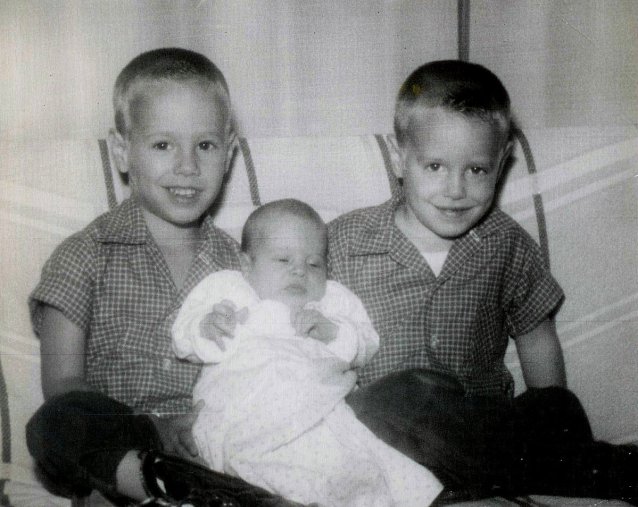
Doug and Russ and their new sister, Terri


The Coronado Ferry and the Bridge: Part 1

My original intent was just to tell you about the Coronado Ferry but after thinking about it and discussing it with Pat the story grew a little. Back in the late 1950’s and 60’s San Diego Bay was a busy place. There was a fair amount of merchant shipping doing business at the 10th Ave. Terminal. The Navy had a lot of ship traffic at the 32nd Street Pier. National Steel and Shipbuilding was building and overhauling ships so there was a lot of traffic around their docks. There were usually 2 to 4 seaplane squadrons stationed at NAS North Island and they made take-offs and landings in the bay at all hours of the day and night. There were also Navy fighter squadrons stationed at North Island and they were visible from many spots around the bay.

The Navy had an Overhaul and Repair Facility at North Island taking care of aircraft that had returned from Westpac deployments via aircraft carriers. The carriers and other ships were docked at the North Island piers and sometimes there were other Navy ships at anchor in the bay. Convair was developing the Sea Dart, a jet-powered seaplane that could be seen taxiing in the bay. The tuna fleet was still operating out of San Diego. The fishing grounds within reach of this port were being “fished out” but the fleet was still pretty large. Toward the west end of the bay at the sub base there was traffic consisting of both diesel subs and the new nuclear boats. The ferry boats were on regular schedules and were plowing back and forth all day long. There were motor launches known as “nickel snatchers” that picked up passengers, mostly sailors, at the foot of Broadway and delivered them to the ships at anchor or over to North Island. Take all of this traffic and throw in the tour boats and private sail boats and you can imagine the apparent chaos all day long.

b-f_1

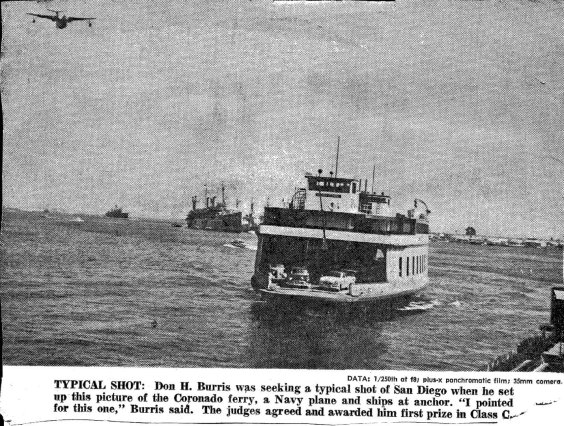
The picture below will give you some indication of the variety of traffic on the bay. The airplane in the upper left hand corner is a P5M-2 seaplane such as I flew in and it is coming in for a landing. The planes flew up the bay (north) and when over the ferry landing made a slight turn to port to follow the curvature of the bay. As they crossed over the ferry slips, the pilot keyed his mike and announced “Ferry slips” and the Air Controller in the tower would take a final look at the sea lane for traffic and acknowledge with “Cleared to land.”

b-f_2-copy

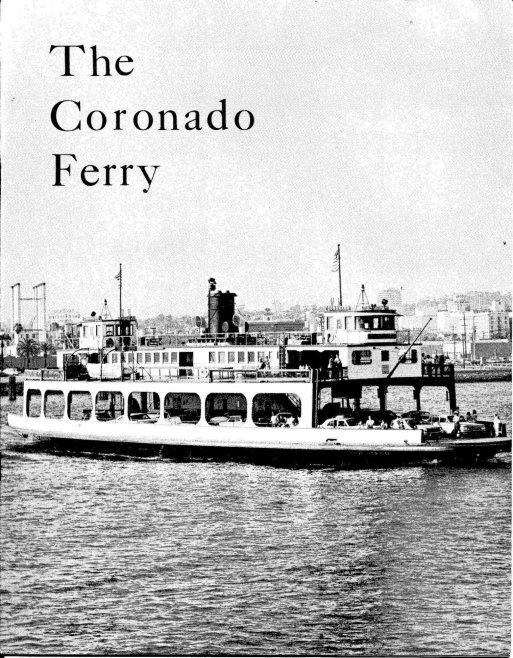
Being from Kansas, Pat and I weren’t used to large bodies of water or waterborne transportation so riding the ferry was a unique and wonderful experience for us. The bay crossing only took a few minutes but there was enough time to jump out of your car and go lean on the rail or go to the top deck and have a seat and enjoy the ride. I believe there were a total of 5 ferry boats. Our favorite was the Crown City because there was no roof over the cars. The other boats had large superstructures that covered the cars on the deck and made you feel like you were in a garage.

b-f_3

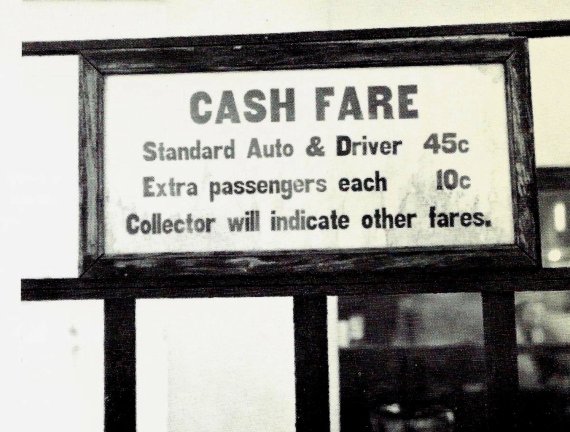
I was stationed at North Island, in Coronado, and we lived in Coronado for 2 years. In 1960, we bought a home in San Diego and that’s where my life as a commuter began. I found that even though it was farther to go south and around the bay and up the Silver Strand, it was faster than going through downtown San Diego and catching the ferry. Also, there was the money consideration. I was still in the Navy and riding the ferry would have cost me 90 cents a day but gasoline for driving the long way around was only 27.9 or 29.9 cents a gallon (I can’t remember exactly).

I was discharged from the Navy in March of 1961 and got a job with an electronics firm on Kearney Mesa which meant that I still had a long commute. We soon found out that Pat was pregnant and that made it tough because our doctor, Jim Turpin, was in Coronado and besides his practice being there, he was also associated with the Coronado Hospital. Our boys, Russ and Doug were born in the Coronado Hospital and we thought it would be a nice thing to have the new baby there as well.

b-f_4

A booklet published by Home Federal Savings

Being new on the job, I couldn’t take time off to drive Pat to the doctor for her pre-natal visits. She figured out that she could ride the bus to downtown San Diego, transfer to the Coronado bus and get off right in front of the doctor’s office on Orange Ave. She would take the boys with her rather than trying to find and pay a babysitter. I guess the bus ride wasn’t bad and the best part was that the bus could go on the ferry! Pat and the boys loved that! To be on a boat and crossing the San Diego Bay with all the other boats and ships was pretty heady stuff.


San Diego Chargers: Still Here

talking-football

“Me and Fouts…talkin’ football.”

Grandson, Jeff, and San Diego Chargers Quarterback, Dan Fouts.
Our son, Russ, took the picture.

I see on the evening news that disappointed San Diego Charger fans are having trouble dealing with the fact that the Chargers are moving to Los Angeles. They are whining and crying and burning their Charger memorabilia and are most certain that the end of the world has come. Well, folks, everything has an expiration date. The triple-crown winner retires, the aircraft carrier is de-commissioned, or maybe a favorite movie actress dies. Everything expires.

Let’s stand up and look this right in the eye. Over this past 56 years, or your part of it, you have stored up some wonderful memories. For the rest of your life you will have that treasure trove to draw on. Thanks to Air Coryell and some interesting and talented quarterbacks, you will remember the excitement. I’m talking about Jack Kemp, John Hadl, Dan Fouts, Drew Brees, Doug Flutie, and Philip Rivers. We even had the great Johnny Unitas toward the end of his career. And, not a quarterback but the scourge of quarterbacks, there was defensive end, Deacon Jones. The Deacon was exciting to watch as he beat opposing linemen and he always had something to say.

We saw some other exciting players, too, like Speedy Duncan, Chuck Muncie, and L.T. How about Lance Alworth? I got to meet him once. My son and grandson got to meet Dan Fouts. We will definitely remember those times.

You may have gone to Jack Murphy/Qualcom Stadium to attend your first Pro-Football game. Or, you may recall watching the games with good friends or relatives who are no longer with us. You will remember these times together.

In the coming years there will be many times and many circumstances that will spark your memory and cause you to pull up a giggle or a cherished remembrance. That’s the stuff that keeps us warm.

Dave Thomas
January 13, 2017


Tornado 1945

tornado-augusta

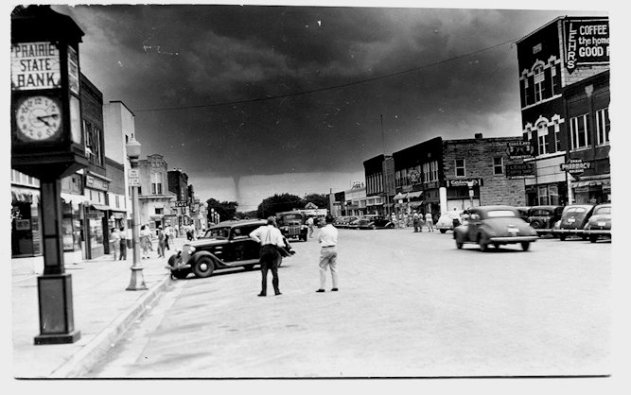
Augusta, Kansas; 500 Block of State Street, looking south. 1945

Fortunately, the tornado veered off and didn’t strike the town but it came close.
Dave Thomas           October 18, 2015


I like this picture because of the drama it displays. The big, black funnel looks like it is coming right up the main drag. The two men in the street seem transfixed and don’t know if they should stay and watch or run for cover.

Since posting this picture, I’ve received information that makes it even more compelling. I have received e-mails from Keith Scholfield and Jack Parker telling me of their connection to the event.

First, let me give you some background. Keith’s Dad, Gene Scholfield, owned Scholfield Hatchery and dealt in feed and grain and chicks. The store, easily identified by its white front, was located on the west side of the 400 block of State Street. Naturally, Keith spent a lot of time there. The first store north of the Hatchery was Bartholomew Furniture, owned by Jack Parker’s Grand-dad, Charles Bartholomew. Jack lived in the neighborhood and spent quite a bit of time at the family store. This information helps explain why the two boys were in the right place at the right time to witness the tornado that was heading for town.

If you look down toward the center of the picture, on the west side of the street, you can see the white storefront of Scholfield’s Hatchery. Keith has seen the picture a number of times over the years. It’s kind of fuzzy because it has been copied so many times, but as Keith points out, if you look closely you will see people standing on the roof of the building. Those are Gene Scholfield’s  employees along with Gene and Keith and Jack Parker. Jack first saw the picture a year or so ago on the museum’s web site and it triggered some fuzzy recollections in his memory of standing on a rooftop and watching an approaching storm. Jack and Keith have conferred about the picture and, though the memories are quite distant, agree that they were on the roof as the tornado was heading for town that day.

Keith says that the day after the tornado was sighted, his Dad took him for a drive southeast of town. They found the track of the tornado crossing Haverhill Road in a spot just north of Smileyberg.

Now, we’ve got a great picture and some people that we know who were associated with it. I think it’s remarkable that 3 old boys like us are communicating through the magic of the Internet about an incident that took place 71 years ago. Keith and I are 80 years old now and Jack is 81 and we have resurrected this story so it can be shared.

Dave Thomas Revised
November 29, 2016


Connections

I grew up in Augusta, Kansas, a small town seventeen miles east of Wichita. Augusta served as a bedroom community for the larger city. Many of our friends and relatives worked in the aviation industry. During WWII, Beech, Cessna, and Boeing hired thousands of people and the city called itself “The Aviation Capital of the World.” There were many small manufacturers before the war and during the evolution of the industry they came and went due to money and growth problems or by being swallowed up by more aggressive entities. One of the success stories after the war was the development of the Lear Jet by Bill Lear and company. I’ve got a few little stories that are loosely connected to Wichita aviation that I’d like to share. I guess they are important only because I remember them. Hope you find them interesting.

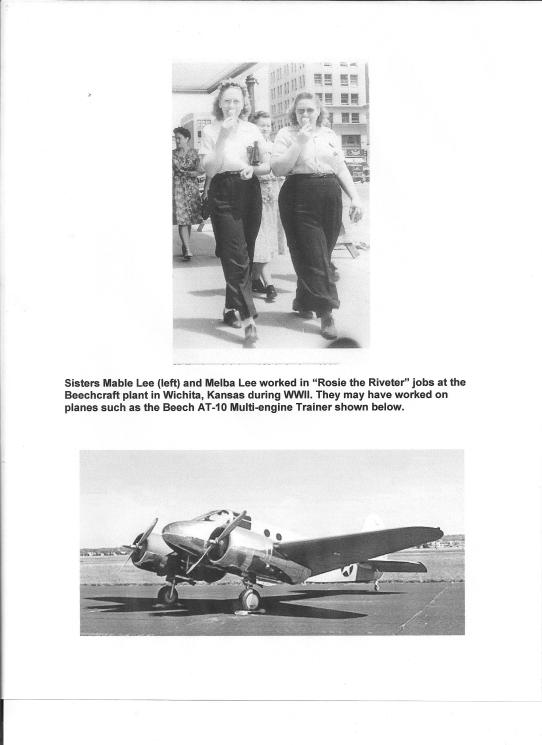
During World War II, Pat’s mother, Melba Lee and her younger sister, Mable did their part by working as “Rosie the Riveter” at Beech Aircraft (later known as Beechcraft). They did well and Melba advanced to a Section Leader position.

rosie-the-riveter

I’m not sure when, but it probably would have been 1945, our Mom was working at the local refinery, and our great-aunt Rachel Peebler was taking care of my sister and I. One summer day, she loaded us up in her green Packard and took us to Wichita to buy some school clothes. We went to Buck’s Department Store on the northeast corner of Broadway and Douglas. We got our shopping done and Aunt Rachel said she was taking us to lunch. Diagonally across the intersection, on the southwest corner, was a big, brown, brick building that I think was a bank. We entered the building, went to the elevator, and rode up to the second or third floor. We stepped out of the elevator into a pleasant-feeling and busy restaurant. Aunt Rachel led us through the tables until she came to the table of a well-dressed older man who rose as she approached and shook her hand. She introduced the man as Mr. Brown and said she had known him for some time. In later years, I figured that he most likely was the man that owned Brown’s Bank in Augusta.

We left Mr. Brown and continued to another table where two ladies were seated. Aunt Rachel introduced us to Olive Ann Beech. We kids knew who she was. She and her husband, Walter Beech, owned Beech Aircraft and were prominent in the business and social life of the city. Their names were in the papers or on the radio every day. Aunt Rachel visited with Mrs. Beech and the other lady for a few minutes and then we had lunch and went home.

The first jet airplane I ever saw was heading for the air base in Wichita. I don’t know the exact year but can establish some brackets on the time. We were at Augusta Junior High School. The school served grades 6,7, and 8. That means I was probably 11, 12, or 13(1947-1949). It was during the afternoon recess when we spotted the plane heading west toward Wichita. The development of jet fighter planes had been in the news quite often. I can’t remember what model it was but the next day the papers carried the story about the plane and its arrival at the base in Wichita.

When I enlisted in the Navy in 1957, I sold my car, a baby-blue 1953 Ford convertible. The morning I was to leave, Johnny Luding drove me to Wichita and dropped me off at the Navy Recruiting Office. After I got out of boot camp in June, I came home on a 30-day leave. Jack Watson was working in the Auditing Department at Sears Roebuck in Wichita. He said there was a cute girl working there and worked it out to introduce me to Pat. We started going out but I was hampered by my lack of transportation. Johnny was working second shift at Boeing and said I could use his car. So, I would drop Johnny off at Boeing and then go spend the evening with Pat. At the proper time, at the end of the evening, I would be back at the Boeing gate waiting for John. Pat and I got acquainted and made up our minds about each other and got married that November on a 3 day Veterans Day weekend. Since we just celebrated our 59th wedding anniversary, I want to say “Thanks again” to Jack and Johnny.

After my 30-day leave, and courting Pat, I checked into Glenview Naval Air Station. It was located just outside of Chicago. Naval Reserve Squadrons “Weekend Warriors” trained there so there was a lot of flying done on the weekends. The pilots had to get in some “stick time” to maintain their proficiency and would fly short hops locally or to nearby cities. They usually tried to get in 4 hours at a time. When I wasn’t working, I would hang out at the Operations Building and catch a ride. For multi-engine aircraft, the base had R4D’s (same as U.S. Air Force C-47) and SNB’s. I only took one hop in an R4D and was bored out of my mind as there was nothing to do but look out the window. The Navy SNB was a variant of the Beech Model 18 or “Twin Beech” as it was known. It was a smaller twin engine aircraft, made for small airfields and was a very reliable aircraft. I forget how many seats it had but you could sit up close to the pilots and watch what they were doing. I probably took half a dozen hops in the SNB’s for a total of 25 or 30 hours. Fun stuff.

I don’t know all the details but sometime during the early 1960’s, my friend, neighbor, and classmate, Glenn Douthitt, was working at Boeing, in Wichita, as a draftsman. Bill Lear moved Lear Jet to Wichita in 1962 and began work on Lear Jet #1. Glenn went to work for Lear and played a big part in the design and layout of the innovative new instrument panel. Glenn went on to become the Chief Contracts Negotiator for the Avionics branch of Lear, located in Grand Rapids, Michigan.

Now, you’ve read a bunch of little stories that are connected in some way to Wichita and its aviation history. I think it is interesting to see how memories can be attached to a common thread. If any of this aviation talk has piqued your interest, one story you might enjoy pursuing is the history of Bill Lear and Lear Jet.

Finding George P. Sicks

November 25, 1996

Here’s a story that I have enjoyed telling for the last couple of weeks. It could be titled “It’s a small world in the genealogy business” or some such.

My Grandpa, George F. Sicks, and Grandma, Ruby, were divorced when my Mom was about 6 years old, and that would have made it about 1919. Mom was raised by her family in Kansas and that was where I grew up also. Grandpa moved around a lot and spent time in Kansas, Arizona, and Los Angeles but he always kept in touch with Mom. She knew that Grandpa had a nephew named after him that was living back in Grandpa’s home town, Iola, Kansas. Grandpa always referred to the nephew as “Young George”. Mom never got to meet Young George and, during the depression, when she heard he had moved to Los Angeles 9she figured she never would. Through his letters and occasional visits, and until he died in 1958, Grandpa kept Mom and the rest of us up to speed on Young George.

A couple of years ago, I got interested in genealogy and started gathering information about the various branches of the family. I didn’t have much luck with Grandpa’s side of the family. I didn’t know a single person named Sicks.

About 6 weeks ago, to help with the research, I bought a computer program called “Home Phone” that is supposed to contain 80 million phone numbers and addresses. Two weeks ago, I was doing some research and opened the Home Phone program. I typed in Grand-dad’s last name and asked the program to search all the western states. The computer did its stuff and came back with a list of about 50 people named Sicks. At first, I didn’t see anything I recognized, but right in the middle of the page was the name “George Sicks” and the address given was only 10 or 12 blocks from where I lived in El Cajon, California! I thought that if I was lucky it might be a son or grandson of “Young George”. I called and had to leave a message on their answering machine. I said, “I’m Dave Thomas and my Grandpa was George F. Sicks of Iola, Kansas. Do you think we might be related?” The next day

Pat answered the phone and it was George. He said, “I’m George Sicks and tell your husband I was named after his Grandpa.” By gosh, I had found Young George, himself!

I went over and visited with George and his wife, Justine, that evening. They told me a lot of family history and had pictures of 6 generations of the family. When I showed them the printout from Home Phone they identified 4 relatives that they had met.

Well, that’s the story. I finally got to meet a guy I had heard about all my life and we hit it off right away. George is 82 years old and I’m 60 now but I hope to see a lot of him in the future.

P.S.

November 9, 2016

George lived to be 94 and passed away in 2008. We had plenty of visits at their house and ours and we enjoyed a few meals at various Mexican restaurants around town. They knew a lot of family history for when George retired, they bought a travel trailer and spent a year traveling around the country and called on a lot of relatives.

When George turned 86, he wanted a big birthday party so his wife, Justine, and step-daughter Kathy Kingsbury put together a memorable one. The plan called for a cruise to Santa Catalina Island with a morning spent sight-seeing in Avalon, a big lunch at a local restaurant, and more sight-seeing in the afternoon. They invited kids, grand-kids, and cousins like me from all over the country. There were at least 30 of us and maybe more. Pat and I drove up to Long Beach the night before and stayed in a motel instead of trying to fight L.A. traffic on the day of the party. We all met down at the pier at 7:00 AM and drank coffee and got acquainted until it was time to go. While we were milling around, Kathy was passing out baseball caps to everyone. The ball caps were well conceived in that they had been stenciled “80 Sicks” in honor of George’s 86th birthday.

g-p-sicks-1

In 2002, Pat and I moved to Keller, Texas, on the north side of Fort Worth and stayed for 7 years. George and Justine flew over and visited us twice. They enjoyed sight-seeing and especially enjoyed our trips to Old Fort Worth and the Stockyards. We always got there in time to watch the cattle drive before we had lunch.

In 2004, while still in Texas, we got a call from Justine saying that there was going to be a big party for George’s 90th birthday. They were inviting everyone back for a day at the San Diego Zoo. It would be a day of visiting and looking at the animals and meeting for lunch at the zoo’s restaurant. I was told that since I lived in Texas I would have to wear my cowboy hat. Pat drove us to San Diego and we went to George’s party and spent a few days visiting with our kids. It was a lot of fun to meet new relatives and visit with those we had met previously. George seemed to enjoy every minute of it.

November 25, 1996

Here’s a story that I have enjoyed telling for the last couple of weeks. It could be titled “It’s a small world in the genealogy business” or some such.

My Grandpa, George F. Sicks, and Grandma, Ruby, were divorced when my Mom was about 6 years old, and that would have made it about 1919. Mom was raised by her family in Kansas and that was where I grew up also. Grandpa moved around a lot and spent time in Kansas, Arizona, and Los Angeles but he always kept in touch with Mom. She knew that Grandpa had a nephew named after him that was living back in Grandpa’s home town, Iola, Kansas. Grandpa always referred to the nephew as “Young George”. Mom never got to meet Young George and, during the depression, when she heard he had moved to Los Angeles 9she figured she never would. Through his letters and occasional visits, and until he died in 1958, Grandpa kept Mom and the rest of us up to speed on Young George.

A couple of years ago, I got interested in genealogy and started gathering information about the various branches of the family. I didn’t have much luck with Grandpa’s side of the family. I didn’t know a single person named Sicks.

About 6 weeks ago, to help with the research, I bought a computer program called “Home Phone” that is supposed to contain 80 million phone numbers and addresses. Two weeks ago, I was doing some research and opened the Home Phone program. I typed in Grand-dad’s last name and asked the program to search all the western states. The computer did its stuff and came back with a list of about 50 people named Sicks. At first, I didn’t see anything I recognized, but right in the middle of the page was the name “George Sicks” and the address given was only 10 or 12 blocks from where I lived in El Cajon, California! I thought that if I was lucky it might be a son or grandson of “Young George”. I called and had to leave a message on their answering machine. I said, “I’m Dave Thomas and my Grandpa was George F. Sicks of Iola, Kansas. Do you think we might be related?” The next day

Pat answered the phone and it was George. He said, “I’m George Sicks and tell your husband I was named after his Grandpa.” By gosh, I had found Young George, himself!

I went over and visited with George and his wife, Justine, that evening. They told me a lot of family history and had pictures of 6 generations of the family. When I showed them the printout from Home Phone they identified 4 relatives that they had met.

Well, that’s the story. I finally got to meet a guy I had heard about all my life and we hit it off right away. George is 82 years old and I’m 60 now but I hope to see a lot of him in the future.

November 9, 2016

P.S.

George lived to be 94 and passed away in 2008. We had plenty of visits at their house and ours and we enjoyed a few meals at various Mexican restaurants around town. They knew a lot of family history for when George retired, they bought a travel trailer and spent a year traveling around the country and called on a lot of relatives.

When George turned 86, he wanted a big birthday party so his wife, Justine, and step-daughter Kathy Kingsbury put together a memorable one. The plan called for a cruise to Santa Catalina Island with a morning spent sight-seeing in Avalon, a big lunch at a local restaurant, and more sight-seeing in the afternoon. They invited kids, grand-kids, and cousins like me from all over the country. There were at least 30 of us and maybe more. Pat and I drove up to Long Beach the night before and stayed in a motel instead of trying to fight L.A. traffic on the day of the party. We all met down at the pier at 7:00 AM and drank coffee and got acquainted until it was time to go. While we were milling around, Kathy was passing out baseball caps to everyone. The ball caps were well conceived in that they had been stenciled “80 Sicks” in honor of George’s 86th birthday.

In 2002, Pat and I moved to Keller, Texas, on the north side of Fort Worth and stayed for 7 years. George and Justine flew over and visited us twice. They enjoyed sight-seeing and especially enjoyed our trips to Old Fort Worth and the Stockyards. We always got there in time to watch the cattle drive before we had lunch.

In 2004, while still in Texas, we got a call from Justine saying that there was going to be a big party for George’s 90th birthday. They were inviting everyone back for a day at the San Diego Zoo. It would be a day of visiting and looking at the animals and meeting for lunch at the zoo’s restaurant. I was told that since I lived in Texas I would have to wear my cowboy hat. Pat drove us to San Diego and we went to George’s party and spent a few days visiting with our kids. It was a lot of fun to meet new relatives and visit with those we had met previously. George seemed to enjoy every minute of it.

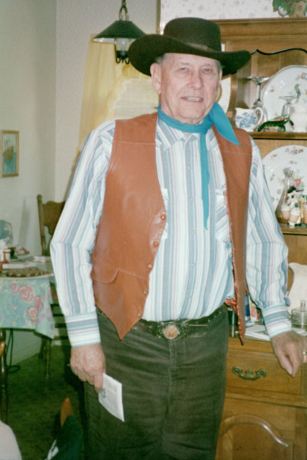
Here’s George at 91 or 92 and headed for a western party.

cowboy-george


The Ball-Point Pen

What if you stopped off at the bank to cash a check and they wouldn’t accept it because it was written with a ball point pen? That’s what happened at our bank and many others in the 1950’s. As a tool being used in the transfer of money, the pen had to function in a near perfect manner to protect the banks from great liability.

The ball point pen was marketed during the late 1940’s but didn’t do well. They clogged and skipped and just weren’t satisfactory. At least two companies went out of business because they couldn’t make the things work consistently.

In the 1950’s, here they came again. The public was really enamored of them. The ball point was so much cleaner and more efficient than the old pens, ink wells, and blotters. There had been problems with the manufacturing of the balls and reservoirs and the ink itself. The pens clogged and skipped until you couldn’t figure out what the number or letter was supposed to be. There was even speculation that the ink might just disappear. This was giving the banks major headaches. When the pens skipped a few letters it might be impossible to read the date, the amount, or the signature. The pens were causing so many problems that our local bank and others finally said “whoa”. After World War II the world was hungry for new technology and we were being held back. The high-handed bank was keeping us from using these new toys. How dare they? This became a topic of conversation at the dinner table, at work, at school, and certainly at the barber shops and beauty shops of our town.

Over time, the kinks were worked out, the pens became reliable and the bank lifted the restriction against using them. However, this didn’t solve all the problems. Suddenly, there were chains affixed to the pens and they were being attached to the writing tables in the bank. The town was buzzing again! Doesn’t the bank trust its own customers? They think we are thieves! The problem was that the bank was buying high quality pens…much better than the public was getting at the dime store, so people wanted the good ones. Eventually it all died down and things became as you see them today.

Dave Thomas
10/31/2013

Flight of the Goose

The Flight of the Goose

In the late summer and fall of 1956, I was roughnecking in the oil fields of eastern Colorado. That’s sand hill country and it’s a pretty bleak-looking place. Oil had been discovered and there were a few producing wells. The area was described as shallow-hole country because if oil was found it was generally at 3800 to 4400 feet. Since the holes weren’t very deep, we could move the rig in, drill a hole, and be out in a week.

I worked for a contract drilling company. We were hired to drill holes and hopefully bring in a well but it didn’t always happen. The rig I worked on drilled 20 dry holes in a row. We drilled where the geologist located characteristics that looked good but it was still just a SWAG (Scientific Wild Ass Guess).

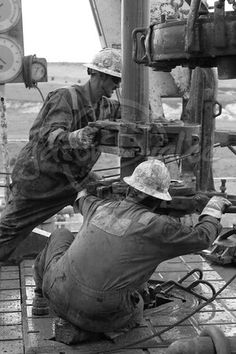
There were 4 men on our drilling crew, the driller and 3 roughnecks. The driller was the boss and operated the controls of the rig and maintained the drilling logs. Two of the roughnecks worked on the “floor” of the rig and the third man worked up high, 20 feet above the floor, and was known as the derrick man. It’s interesting to know how the equipment works but I won’t go into it here.

roughnecks

Working the floor

The pipe is known as “drill stem” and each section is about 30 feet long. If your hole is 3,000 feet deep then that means you have used 100 pieces of drill stem. Actually, 1 piece might be 29’10″ and the next one 30’2″ so the driller records the length of every piece of drill stem before it goes in the hole. The 2 roughnecks working the floor are responsible for “strapping” (measuring) the pipe. They report the lengths to the driller.

The job of the derrick man can be dangerous so an experienced hand normally works that job. I won’t explain it here but you can find a couple of youtube videos that describe it pretty well.

The guy that worked the derrick on our crew was Bud Giese (geez-ee) and his nickname was “Goose”. The Goose was a year or so older than I and had been working in the oilfields since high school. The other two guys in the crew were married but Bud and I were single and shared a room at the hotel where we stayed. Bud was one of those guys that everybody liked and you could probably call him “charismatic”. We could go into a restaurant and in 2 minutes he would have a date with at least one waitresses and possibly two. Mothers would say that he was definitely a “bad boy”. It was fun being around him and watching him operate because to him, life was a picnic and he wanted to taste all the goodies. His “good time” attitude caused a few confrontations but when it was time to fight, he was right in the middle of it. His exuberance was something to see. There was never a dull moment.

This week, we were drilling a hole in the middle of what was reported to be a 100,000 acre ranch. This was the day we would know if we had a well or not. We knew we were close when the drilling got down far enough to hit a certain strata of sand because it had been established when the producing wells in the neighborhood were “brought in”. The night crew had pulled the pipe out of the hole and replaced the drill bit with a core-drilling gadget that would capture a sample of several feet of the strata and the geologist could examine it and determine if we had hit oil-bearing sand. When we got to work that morning, we finished bringing up the core sample and were just loafing around and waiting for the geologist to show up and check it. Goose was still up in the derrick so I climbed up to join him while we were killing time. We were leaning on the rail and looking over the countryside while we talked. All of a sudden, 4 or 5 cars full of people came over the hill toward us. The driller had notified our office by radio that we would soon know if we had a well and they had called the ranch owner and his family. The cars pulled up close to the rig and 10 or 12 people got out and were standing around and hoping for good news.

We watched as time dragged on and the crowd got bored and began shifting from one foot to the other. Goose says “Those poor people are getting bored down there. I think I’ll give them something to get excited about.” He was still wearing his safety harness and started tightening up the straps. He checked his tether to make sure it was anchored securely and he had plenty of slack. Then he climbed over the rail and moved to the outside of it. As he checked his position as regards the derrick legs and the pipe, I noticed that the people in the crowd were talking and a couple of them were pointing toward us. Goose glanced at the crowd, presumably to make sure they were all watching, and then launched himself off the platform in a perfect swan dive! I would swear you could hear the people in the crowd gasp. I was probably gasping or choking a little myself. The Goose had flown!

I would imagine that the faces of the ladies in the crowd turned red as they listened to the driller cussing Bud out. Bud took it with kind of a sheepish grin and didn’t worry about it too much. The geologist soon showed up and told us that we had drilled another dry hole. The rancher and his family wouldn’t remember this as the day they got rich but as the day the crazy roughneck did a swan dive off the drilling rig.

Dave Thomas
April 7, 2015

Derrick man