The weather was good as we left Guam and headed for the Naval Air Station at Iwakuni, Japan. There was nothing to look at but a lot of the western Pacific, and we were anticipating a long and boring day. We were just a few hours out when one of the pilots announced over the intercom that we were approaching Iwo Jima. I had no idea our officers had plotted a course that would take us to this infamous battlefield. Iwo Jima is 814 miles from Guam and it’s another 750 miles to Japan. The Battle of Iwo Jima was one of the fiercest battles of WWII. Over 1,100 U.S. Marines died there and more than 4,000 were wounded. One of the most famous photos of WWII is of the Marines raising the flag atop Mt. Suribachi. Mt. Suribachi is an extinct volcano that rises 554 feet above sea level and dominates the island. It’s a big, black, ugly rock. The Battle of Iwo Jimo was fought from February 19 to March 26, 1945. I was only eight years old, but I remember the news reports. We got war stories from the radio, the newspapers, and the newsreels at the theater. If you are a younger reader, here is a bridge to get you back in the time period. Future actor, Lee Marvin, a 20-year-old marine, was wounded at Iwo Jima. Another young marine in the same Company was Bob Keasham. He was later known as Captain Kangaroo.
The flight was smooth, and we made good time. After we landed at Iwakuni, we attached our wheels and were pulled up the ramp. We were more than a month late, so it was no wonder that the whole squadron was there to greet us. As we lined up at the hatch to disembark, cans of beer were handed to us. When it was my turn, I started down the ladder. Suddenly, a bunch of hands grabbed me and jerked me off the ladder. Then, I was carried to the sea wall and thrown in the water. As I was being dragged onto the ramp, I noticed that none of my fellow crew members had been dunked. I wanted to know what was going on. It turned out the results of the ratings exams had been posted, and I had made Third Class. I was an Aviation Electronics Technician Third Class, AT3. Hooray! More money!
NAS Iwakuni was an okay base. There was a good library and a good gym, and that’s where I spent most of my off-duty time. Trying to save money, I allowed myself one ten-cent glass of beer each week at the Enlisted Men’s Club. I was smoking Pall Mall cigarettes as they were longer and could be cut in two, thus providing two smokes for the price of one.
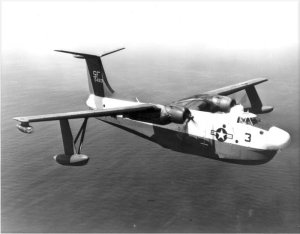
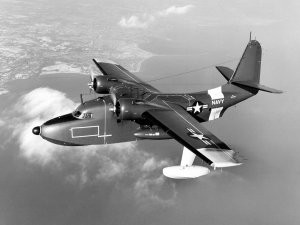
This was the time of the Cold War, and our squadron’s job was to fly patrols in the South China Sea and monitor shipping. Our route took us past the southern tip of Korea and past the coast of China. We took pictures of all ships and identified them by name and/or number. We also recorded all vital info such as deck cargo and people in view.
One day, we had reached the northern-most point of our trek, and had done a 180 and were headed back south. After some period of time, one of the pilots came over the intercom saying, “We’ve got company!” I looked out my window and there was a Russian MIG with a Chinese pilot. He was having trouble slowing down enough to match our speed and had his flaps down and dive brakes down. He was flying just off our port wing and smiling as he stared at us. He could have potted us, and no one would have ever known the difference.
Another time, we had to do a four-hour training hop so that one of the newer pilots could get in some time at the controls. The pilot elected to check out the city of Hiroshima. Some of the city had been rebuilt, but it still looked terrible. The results of the atom bomb were evident. The place had been burned to a crisp.
One morning, the squadron notified us that a typhoon was heading for Iwakuni. All planes were directed to get airborne and head for Sangley Point in the Philippines. We got in the air, but after a couple of hours, lost an engine. That’s another story.
Dave Thomas
5/30/2024
 crittersandcatsdotcom